GenomeNext™ and GenomeReveal™
GenomeNext™ is now available for ordering through AmbryPort™. Paper TRF orders are not accepted at this time. GenomeNext™ is not currently available for ordering in New York State. Please contact your Account Executive with any questions.
A more equitable genome, intentionally developed to deliver answers for every patient.
GenomeNext™ delivers comprehensive whole genome sequencing (WGS) built to solve some of the toughest diagnostic hurdles – bringing clear, equitable answers to all patients throughout their life’s journey.
Why choose GenomeNext?
Whole genome sequencing can provide a diagnosis for over 40% of patients on average. By analyzing exomic, intronic, and mitochondrial variants simultaneously, WGS creates an unparalleled opportunity to find answers earlier in the diagnostic journey.
Key capabilities
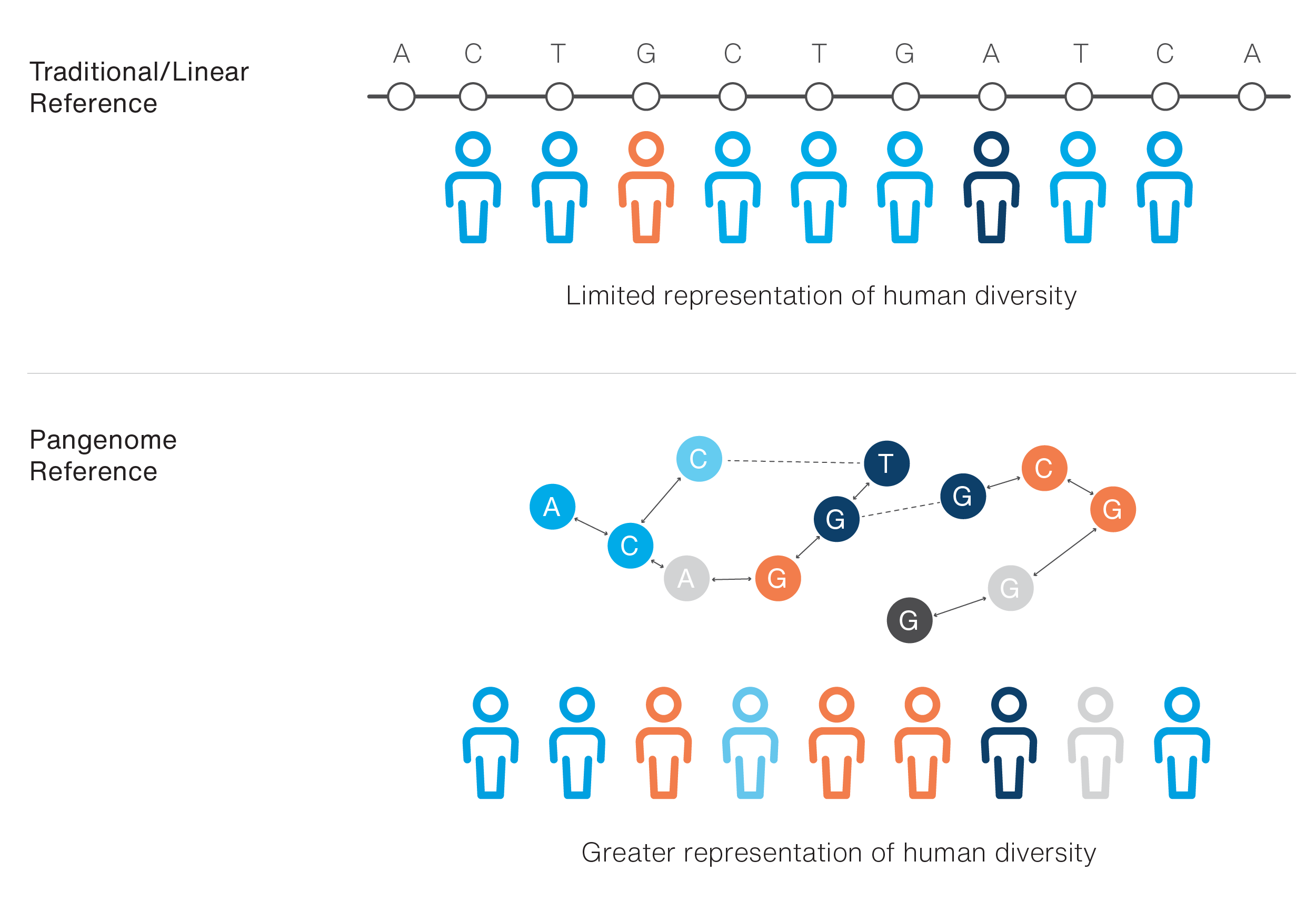
Reduced population bias
Using a pangenome-enabled reference reduces historical bias and significantly improves variant detection across diverse and underrepresented populations.
Functional RNA evidence
GenomeReveal™ adds supplemental RNA analysis to GenomeNext™ when clinically relevant variants requiring functional evidence are identified during genome analysis.

RNA analysis can provide additional insight into the impact of variants on:
- RNA splicing
- Gene expression
- Functional impact
By providing additional biological evidence, GenomeReveal™ may help improve confidence in variant interpretation.
Long-term value
Through Patient for Life™, results undergo continuous, lab-driven reanalysis to uncover new answers as genomic knowledge and gene-disease relationships evolve.
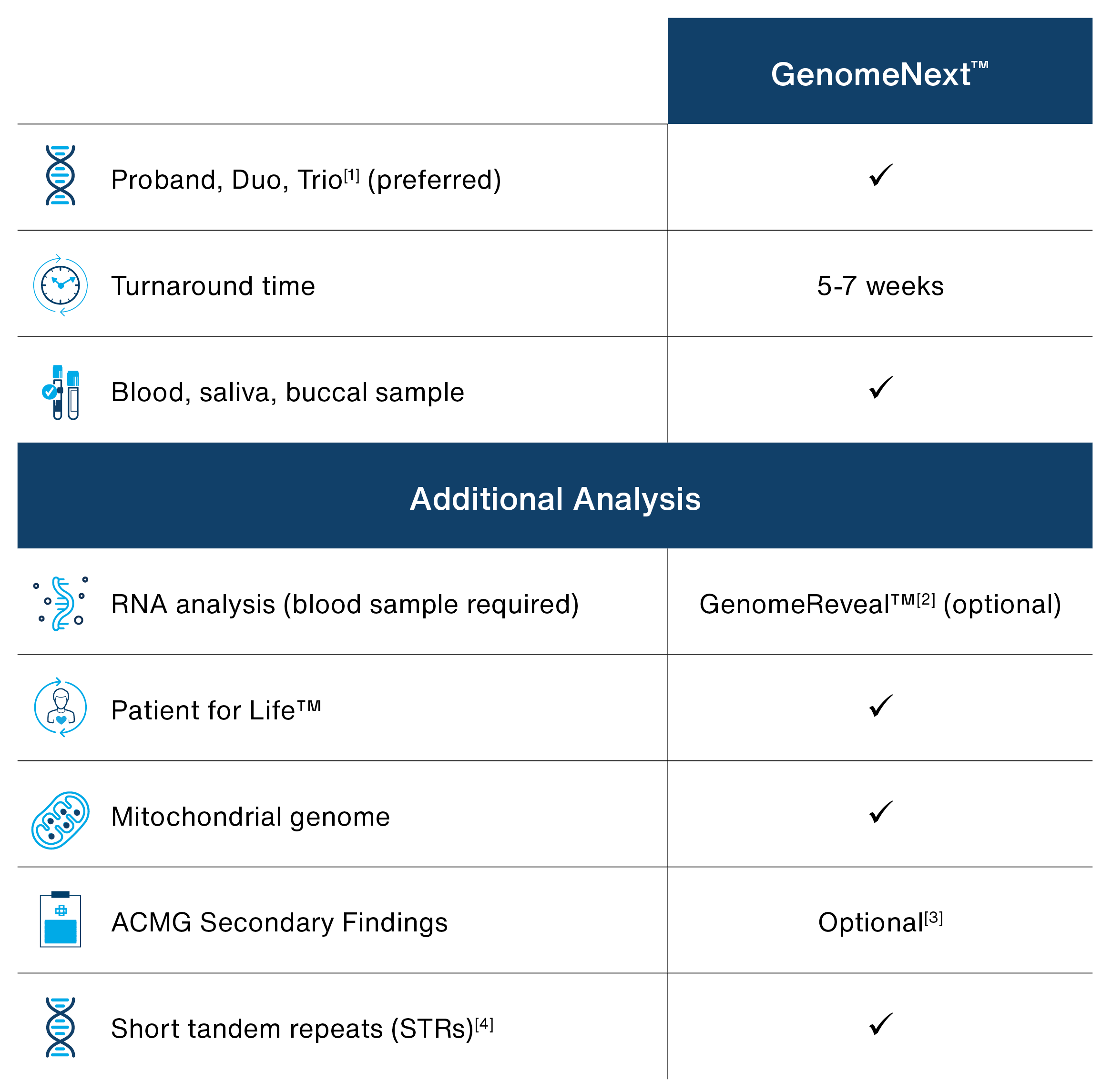
[1] Trio testing is recommended when biological relatives are available and consent to testing, as parental samples provide additional inheritance information to support interpretation. [2] Requires EDTA (DNA) and PAXgene (RNA) specimens. [3] Reports include option for ACMG-recommended secondary findings results, for all genome-sequenced individuals as part of the duo/trio. [4] GenomeNext™ currently includes analysis of select clinically relevant STR expansions, including Fragile X (FMR1), Myotonic Dystrophy Type 1 (DMPK), and Congenital Central Hypoventilation Syndrome (PHOX2B).
| Test Code | Test Name | TAT[1] | Genes |
|---|---|---|---|
| Test Code: 7000 | Test Name: GenomeNext™ |
TAT:
|
Genes: ~ 20,000 SEE COVERAGE DETAILS |
| Test Code: 7004 | Test Name: GenomeReveal™ |
TAT:
|
Genes: ~ 20,000 SEE COVERAGE DETAILS |
| Test Code: 7002 | Test Name: ACMG Secondary Findings |
TAT:
|
Genes: 84 |
|
Footnotes: [1] TAT is estimated based on typical lab performance and may vary depending on a number of factors, including but not limited to specimen sufficiency, order volume, and unforeseen circumstances.; [2] RNA analysis requires an additional 3-4 weeks TAT for reporting after initial DNA sequencing results. |
|||
- AmbryPort Login or Create an Account
- Order a Sample Kit
We offer family variant testing at no additional cost
We offer family variant testing for all blood relatives of patients who undergo full single gene sequencing, multigene panel testing or exome sequencing at Ambry Genetics and are found to have a pathogenic or likely pathogenic variant. Testing must be completed within 90 days of the original report date. Whenever possible, more closely related relatives should be tested before more distant relatives. If you or a family member are interested in learning more about our family testing program or when family testing may be clinically indicated, please contact us or your provider for additional information. Note that Ambry can only provide such family testing services to patients receiving medical care in the U.S or US territories.
Order NowWhy Is This Important?
A genetic diagnosis can provide clarity for patients and families while helping guide personalized medical care.
Benefits may include:
- Informing medical management, screening, and specialist referrals
- Guiding treatment decisions and clinical trial opportunities
- Supporting family planning and future care decisions
- Connecting families with condition-specific resources and communities
When To Consider Testing
Whole genome sequencing is a comprehensive testing approach recommended for the evaluation of:1-4
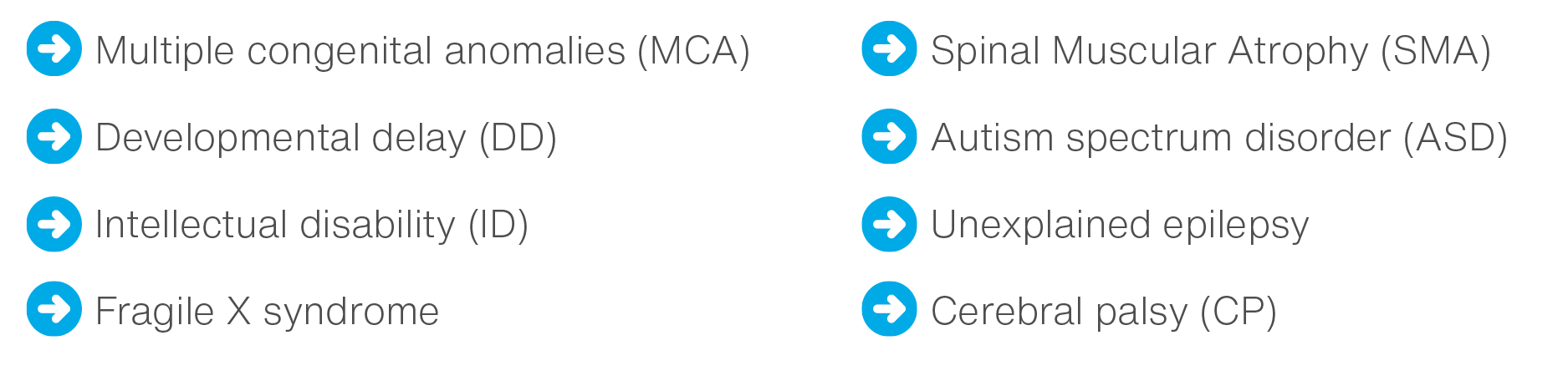
GenomeNext™ may also be considered when previous genetic testing has been negative or inconclusive.
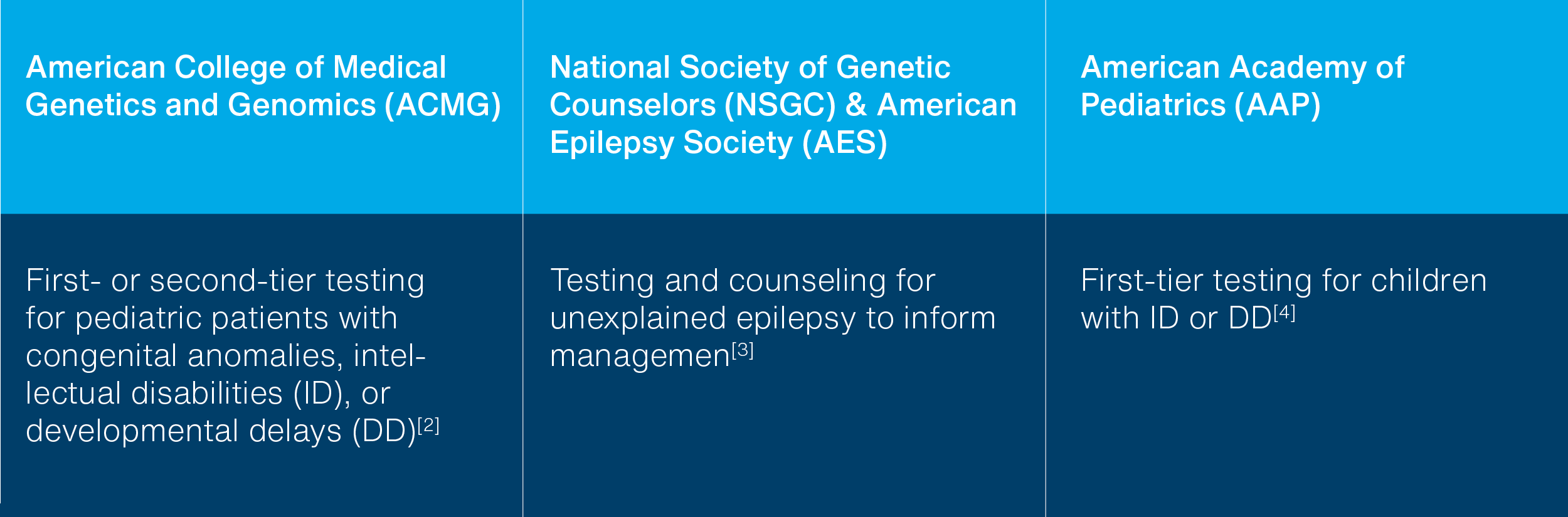
Professional Society Guidance Supports WGS
Test Description
GenomeNext™ uses whole genome sequencing and advanced bioinformatics analysis to evaluate nuclear genes, mitochondrial DNA, and additional genomic regions beyond the coding regions assessed by exome sequencing.
Variants are analyzed using Ambry’s proprietary bioinformatics pipeline and interpreted by a team of genetic experts using:
- Clinical phenotype and HPO terms
- Inheritance models
- Current gene-disease knowledge
- Variant quality and clinical relevance
GenomeNext™ evaluates multiple variant classes, including:
- Single nucleotide variants (SNVs)
- Small insertions and deletions (indels)
- Copy number variants (CNVs)
- Structural variants (SVs)
- Mitochondrial variants
- SMN1 and SMN2 analysis for copy number changes associated with spinal muscular atrophy (SMA)
- Short tandem repeats (STRs)*
*GenomeNext™ currently includes analysis of select clinically relevant STR expansions, including Fragile X (FMR1), Myotonic Dystrophy Type 1 (DMPK), and Congenital Central Hypoventilation Syndrome (PHOX2B). Ambry continues to expand STR analysis capabilities as genomic knowledge and technology advance.
References:
1Wojcik, M. H., et al. Genome Sequencing for Diagnosing Rare Diseases. NEJM. 2024;21:1985–1997.
2Manickam K et al. Exome and genome sequencing for pediatric patients with congenital anomalies or intellectual disability: An evidence-based clinical guideline of the American College of Medical Genetics and Genomics (ACMG). Genet Med. 2021;23(11):2029-37. doi: 10.1038/s41436-021-01242
3Smith, L., Malinowski, J., Ceulemans, S., et al. Genetic testing and counseling for the unexplained epilepsies: An evidence-based practice guideline of the NSGC. J Genet Couns 32, 266–280 (2023).
4Lance H. Rodan, MD; Joan Stoler, MD, FAAP; Emily Chen, MD, PhD; Timothy Geleske, MD, FAAP; Council on Genetics Pediatrics (2025) 156 (1): e2025072219. https://doi.org/10.1542/peds.2025-072219